


KEY TAKEAWAYS
Record issuance proves access, not solvency. EM foreign-currency borrowing reached a record pace despite higher rates and a strong dollar.
Japan still sets the marginal funding test. The BOJ rate stands at 1.25% while the yen remains weak.
Korea has moved from pledge to project. A $22bn Texas plant is the first allocation under its $350bn commitment.
Nepal turns climate damage into fiscal arithmetic. The country is seeking $5bn for flood recovery as aid retreats.
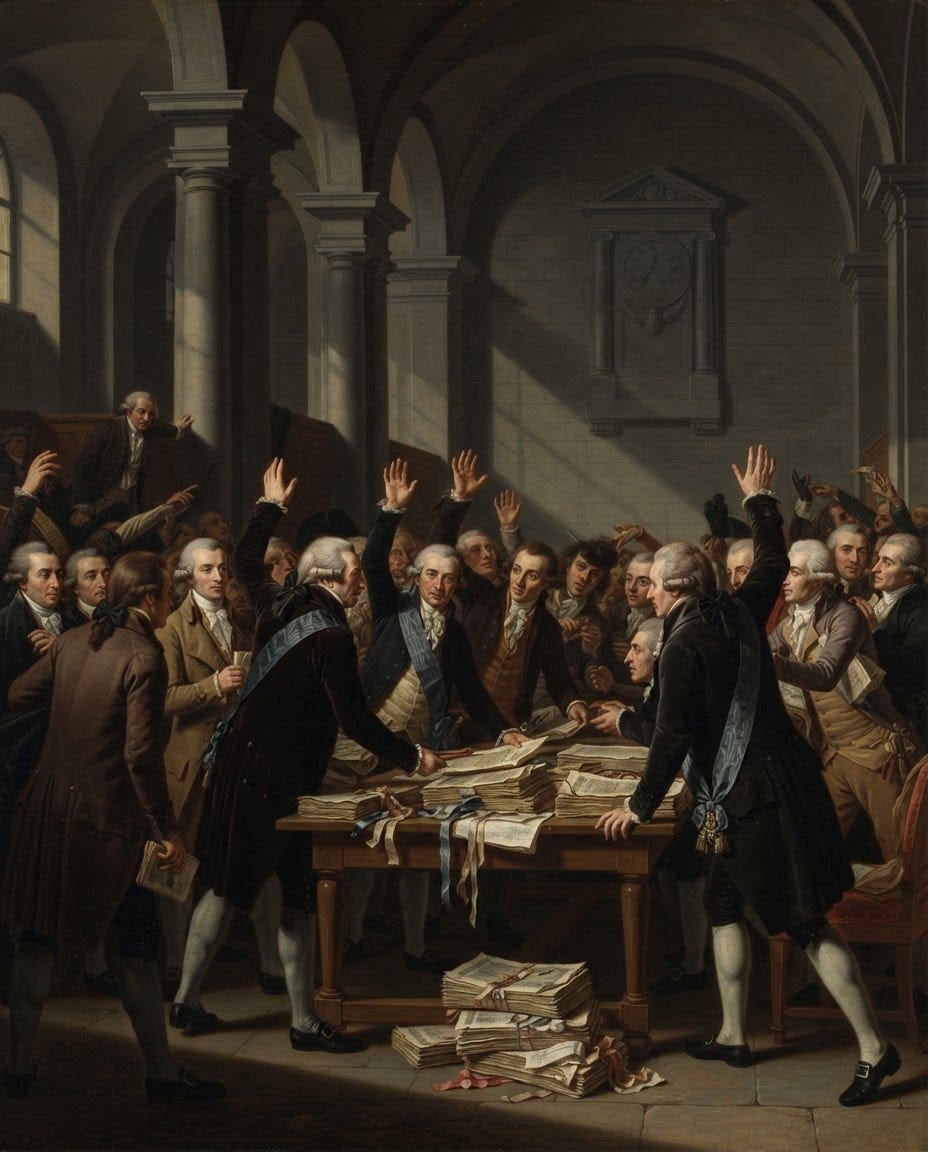
When the Queue Looks Like a Verdict
The market spent the week reading a record borrowing calendar as a referendum on sovereign resilience. The first-level case is persuasive: conflict, higher interest rates and a strong dollar did not close the foreign-currency bond market, while the US-China trade truce now runs to January 10. The second-level question is what the reopened window finances. A bond that refinances a maturity wall can buy time. A bond that pays old coupons with new principal can also make the wall taller. South Korea offers the clean contrast, because its $350bn US commitment has produced a named $22bn Texas power project whose cash flows can eventually be tested. The wider EM calendar offers access, but not one common answer on use of proceeds. This is The Refinance Window: the market sees an open door; the creditor still has to inspect what comes through it.

The Coupon Beneath the Celebration
A primary-market order book settles a liquidity question today and creates a debt-service question for every future coupon date. The DSA logic is simple even when the deal sheet looks triumphant: gross financing need depends on interest expense, amortisation and the primary balance, not on whether a syndicate found buyers. Japan's 1.25% policy rate matters because yen-funded leverage has long reduced the marginal cost of holding duration elsewhere. If the cost of Japan's money rises while the yen remains weak, the signal is not a clean normalisation. It is a contested funding channel in which curve steepness, currency hedging and term premia can reprice together. Import cover does not improve because a sovereign can issue. It improves when the proceeds outlast the liabilities they were raised to meet.
The trade truce illustrates the same distinction between postponement and repair. Washington and Beijing extended the arrangement to January 10, but the summit delivered no breakthrough in the underlying stand-off. A dated truce reduces immediate tariff uncertainty without removing the external-demand risk this desk kept Cautious in The Unsettled Channel. For the bondholder, that difference travels through export receipts, tax collection and the maturity wall before it reaches a spread. The market can capitalise 105 days of calm at once. A sovereign balance sheet receives the benefit only as orders, investment and foreign exchange actually arrive. The refinancing bid is real. So is the calendar attached to it.
From the Syndicate Desk to the Power Grid
Korea is the useful case because a diplomatic number has begun to acquire an operating asset. The $22bn Texas power plant is the first identified project under Seoul's $350bn US investment commitment, converting part of an abstract pledge into a facility with construction costs, financing terms and eventual contracted revenue. That supports the Constructive view on Korea's industrial transmission carried from The Unsettled Channel, but it also sharpens the invalidation. The project is credit-supportive only if its cash flows justify the capital exported to build it. Commercial viability is the bridge between statecraft and repayment capacity. Without that bridge, the headline remains large and the balance-sheet contribution remains small.
The rest of the hard-currency calendar deserves the same project-level discipline. For frontier credits facing near-term refinancing, record market access can extend duration, smooth amortisation and reduce arrears risk, or it can exchange a near-term wall for a more expensive future one. The distinction is visible in maturity, coupon, covenants and use of proceeds, not in the aggregate issuance record. This desk therefore refuses the binary choice between celebrating every deal and distrusting every borrower. The correct framework is The Conversion Test: borrowed dollars count as resilience only when they convert into longer runway, stronger export capacity or a lower financing gap. Everything else is time purchased at a price.
The Bridge the Grants Did Not Build
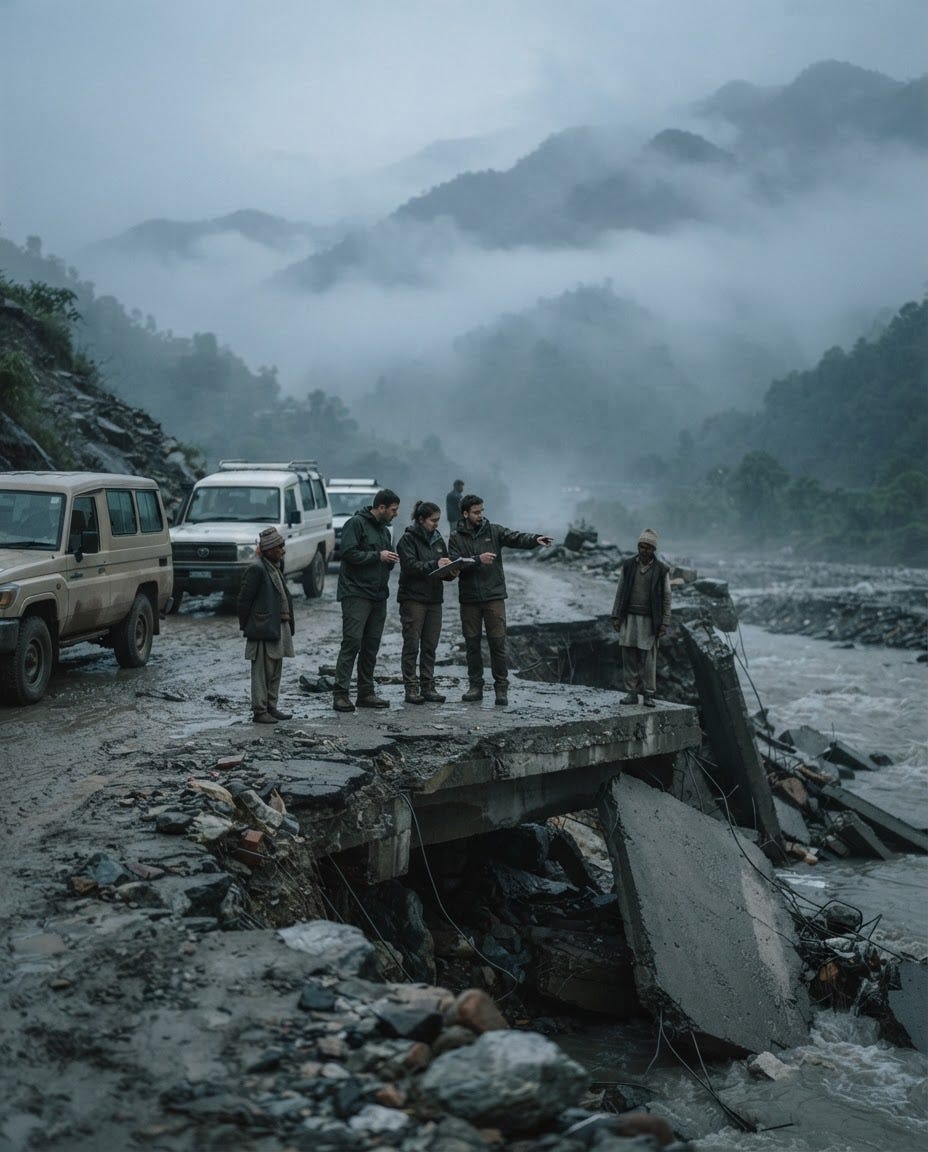
Nepal's $5bn flood-recovery requirement is the week's clearest frontier warning because the financing constraint arrived with the physical damage. Reports indicate that the country is struggling to raise the money as global aid retreats. Reconstruction can support activity, but the creditor must first ask whether it is funded by grants, concessional loans, domestic banks or market-rate external debt. Each source leaves a different claim on the future budget. A grant repairs the bridge. A commercial loan repairs the bridge and adds a coupon. If concessional support does not close the requirement, climate damage migrates into the primary deficit, the domestic banking system and eventually the sovereign financing calendar. The flood is visible now. The maturity profile records it later.
The Window and the Wall
The Standing Book is due after 28 days, and this week's evidence separates two continuing judgments. The Prefer stance on the EM hard-currency front end now faces a 1.25% BOJ rate and record issuance, evidence that access persists while duration funding remains exposed. Korea's Constructive stance gains a $22bn project-level test rather than another promise. The older Pakistan, India and Sub-Saharan Africa positions remain governed by their published invalidations; this week's file does not trigger a change.
We see Asymmetry in EM primary access. Record issuance supports liquidity, but credits facing near-term refinancing still need longer maturities and productive use of proceeds; repeated liability extension without those features invalidates the constructive side.
We Prefer the front end over duration. This carries forward the 4W preference from The Two-Speed State while narrowing the Cautious regional framing in The Unsettled Channel: record access supports the front end, while the 1.25% BOJ rate and weak yen keep duration exposed; stable funding transmission would close the preference.
We are Constructive on Korea's industrial transmission. The $22bn Texas plant advances the $350bn programme from pledge to project; weak contracted revenues or politically directed funding would reverse the view.
We are Cautious on Nepal's reconstruction financing. A $5bn requirement amid retreating aid can migrate into sovereign debt; grants and concessional commitments that close the gap would change the stance.
What the Open Door Cannot Prove
A market that can fund everything has not proved that everything should be funded. Record issuance is valuable because it buys sovereigns time, and dangerous because it tempts creditors to confuse time with repair. The BOJ's 1.25% rate says the marginal price of leverage is moving. The January 10 truce says geopolitical calm carries an expiry date. Korea's $22bn project says commitments can become assets, while Nepal's $5bn requirement says shocks can become coupons. The next cycle will not separate borrowers by who found a bid. It will separate them by what the bid financed. Access is an event. Conversion is the thesis. Repayment is the verdict.
What Would Change Our Mind
The funding channel settles. A stable yen and contained Asian term premia after the 1.25% BOJ rate would weaken the duration caution.
New debt converts into capacity. Disclosed project cash flows and longer maturities across lower-rated issuance would validate the primary-market optimism.
The truce becomes implementation. A durable US-China trade schedule before January 10 would strengthen the external-demand channel.
Regards,
Sovereign Dispatcher