

KEY TAKEAWAYS
Diplomacy is an option, not a balance sheet. The US and China reopened talks on tariffs, AI, and critical minerals ahead of a summit.
The BOJ raised the rate, not the yen. Japan's policy rate reached 1.25% while the country logged a fourth straight monthly trade deficit.
Energy stress travels through import cover. China is drawing down oil stocks while renewed attacks and pipeline disruption keep pass-through alive.
Korea has a transmission route. Its policy programme includes AI transformation and a $350bn US investment commitment restricted to commercially viable projects.

The Headline Has Opened the Door
The market is pricing renewed dialogue as if a reopened door already led to a safer room. FT and Nikkei report US-China talks on tariffs, artificial intelligence, and critical minerals ahead of a Trump-Xi meeting. The first-level interpretation is obvious, the channel lowers the probability of an immediate rupture. The second-level question is what travels through it. The FT also reports that Chinese domestic investment is weakening, while Hong Kong technology issuance is dragging on the wider market. This is not a contradiction to be hidden by the summit headline. It is the relevant distinction. Diplomacy can reduce political temperature without restoring domestic demand, capital absorption, or a durable trade rule. The market wants the photograph. The sovereign balance sheet still needs the plumbing.

Where the Rate Lands
The BOJ's 1.25% decision matters because the currency refused to deliver the normal confirmation. Nikkei reports the rate reached its highest level since 1995, while the FT reports that the yen weakened and authorities warned of possible intervention. Japan also recorded a fourth straight monthly trade deficit in August. The retrieved IMF material frames 2026 growth and fiscal support against an energy shock, while the broader WEO makes the energy distinction explicit: net importers absorb a larger drag unless technology-related activity offsets it. A higher policy rate beside a weaker currency and a continuing goods deficit is therefore not a clean normalisation signal. It is a funding-channel test.
The transmission into emerging credit runs through term premia, not through the policy headline alone. The front end can reprice immediately, but the maturity wall is carried by the curve, the external account, and the cost of rolling liabilities. The IMF's Korea context emphasises AI transformation, industrial investment, and a strategic trade deal, while the Vietnam material describes a still-high trade surplus alongside a services deficit, portfolio outflows, and medium- and long-term debt repayment. Those are different balance sheets, but the lesson is common. A rate move is useful only when the domestic cash flow can carry the financing structure. Curve steepness, breakevens, import cover, and the DSA decide whether a headline becomes a credit event.
From Osaka's Rate to Hanoi's Factory
Korea has more than a narrative because its investment channel is specified, but specification is not execution. The IMF context describes an economic strategy centred on AI transformation, regional demand, and support for strategic industries. The FT reports Seoul will direct its $350bn US investment toward commercially viable projects. That creates a testable transmission chain, technology demand to investment, investment to exports and cash flow, cash flow to external resilience. The desk remains Constructive only while commercial viability and the semiconductor cycle confirm the mechanism. An announcement is not an earnings stream.
Vietnam offers the quieter version of the same test, because diplomacy must still arrive in the external accounts. Nikkei reports that To Lam is using global diplomacy to fuel a growth drive. The IMF material says Vietnam's goods trade surplus remains high, but import weakness reflects constrained domestic demand, services payments widened the deficit, and portfolio outflows increased as the dollar strengthened. Relative to that baseline, a diplomatic growth push changes the expectation before it changes the cash flow. The next evidence is not another speech. It is import recovery, durable capital formation, and whether debt repayment can be met without a renewed external squeeze.
The Tanker Beyond the Summit
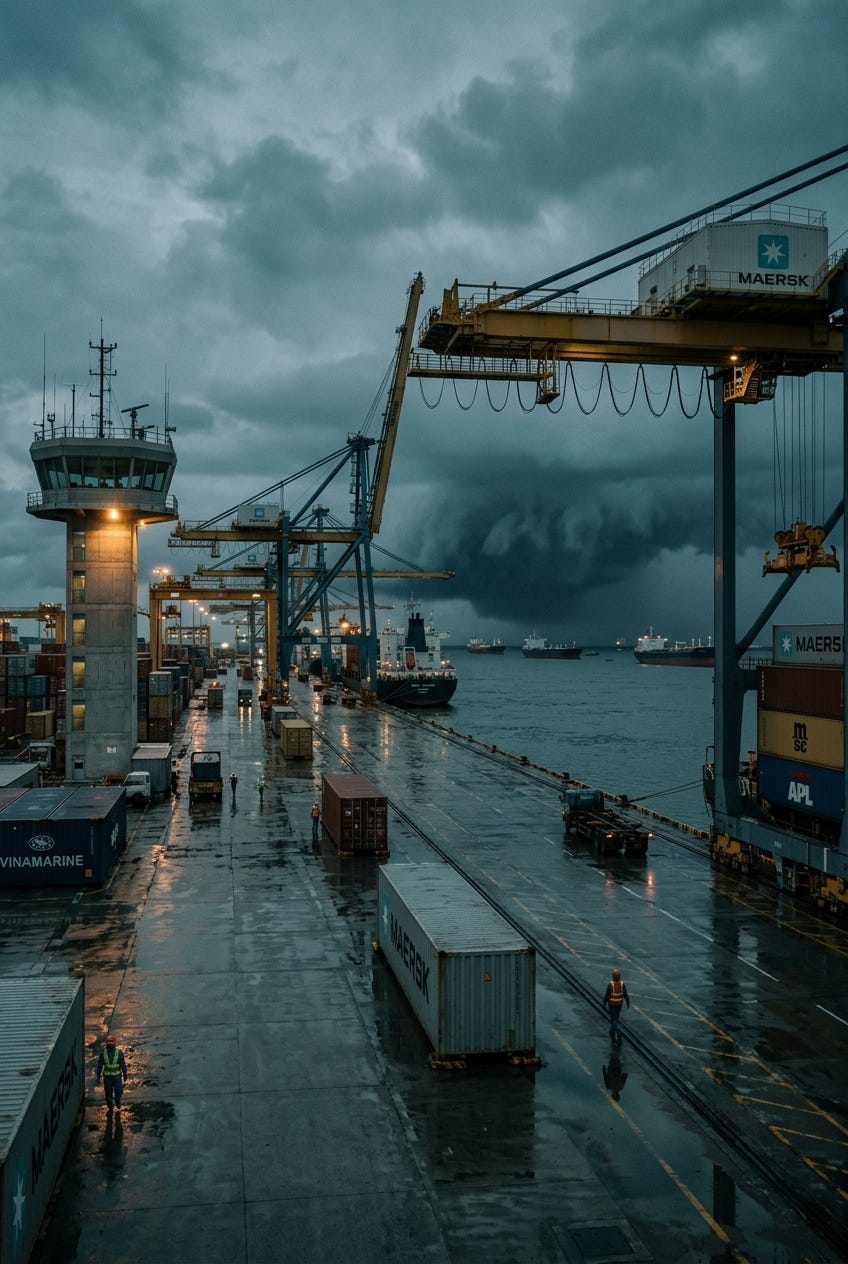
Pakistan's energy risk is the canary because a geopolitical headline becomes a reserve question before it becomes a spread headline. The FT reports renewed Houthi attacks on Saudi Arabia, pipeline disruption, and Pakistan's appeal to Iran, while China is drawing down oil stocks and Chinese oil prices have reached record highs. The source does not establish Pakistan's reserve level or a financing gap, but the mechanism is clear: a sustained energy shock raises the import bill, tests import cover, lifts inflation, and presses the financing calendar. This desk's Asymmetry view on Pakistan therefore stays conditional on disclosed external support and measured pass-through, not on diplomatic optimism.
The Book Behind the Photograph
The Standing Book is due for review after the 1.25% BOJ decision. Consistent with The Hurdle Rate, the Prefer view on the EM hard-currency front end remains a funding-timing judgment, but the rate move keeps the invalidation live. The Cautious China-demand floor has not been confirmed by stronger import evidence, while the Asymmetry view on Pakistan from The Hurdle Rate faces a fresh energy test. This is a record of changing evidence, not realized performance.
We are Cautious on China's external-demand transmission. The dialogue headline does not settle the weaker-investment question; the view changes when domestic demand and import evidence move together.
We are Cautious on Asian funding-sensitive sovereigns. This updates The Hurdle Rate, while a 1.25% BOJ rate with a weaker yen and a fourth monthly trade deficit leaves the funding channel more variable than the headline implies.
We are Constructive on Korea's industrial transmission. The $350bn investment commitment earns that stance only while the commercially viable-project condition and the AI hardware cycle remain observable.
We are Cautious on Pakistan's energy transmission. This updates The Hurdle Rate, while a disclosed financing package can change the balance and a prolonged energy shock leaves the import bill and refinancing calendar exposed.
The Balance Sheet Is the Witness
The market keeps confusing a useful conversation with a completed transmission mechanism. It did so with the summit, with the BOJ's 1.25%, and with the promise that energy inventories can absorb another shock. This desk documented the same distinction in The Two-Speed State, where the export door did not settle the domestic room. The Backdated Print made the timing problem explicit, a number can be accurate and still describe yesterday's balance sheet. This week adds the diplomatic version. A channel can reopen while the cash flow remains closed. The rate can rise while the currency weakens. The investment plan can be large while the viability test remains unanswered. Watch the mechanism. Ignore the photograph. Keep the trigger visible.
What Would Change Our Mind
Funding reprices cleanly. A stable yen and contained Japanese curve pressure after the 1.25% decision would reduce the regional funding risk.
Energy pass-through fades. A sustained reopening of Saudi export infrastructure would remove the immediate importer shock from the thesis.
Domestic demand prints. The next China investment and import releases would change the view if both improve together rather than through exports alone.
Regards,
Sovereign Dispatcher