


KEY TAKEAWAYS
The Reserve Bank of India Held Rates and Exempted Foreign Investors From Bond Tax in the Same Week, an Explicit Capital-Flight Defense the IMF April 2025 Article IV Never Modelled. The FT framed the move as shoring up the rupee against foreign outflows and the Iran war. After five dispatches tracking India through market signal, energy shield retirement, and elite institutional stress, this is the first week the deterioration became central bank policy action.
Indonesia Broke on Both Sides of Its Fiscal Accounts at Once: a Six-Year-Low Trade Surplus and the Arrest of Top Officials Over a 15 Billion Dollar Corruption Scheme. The trade surplus confirms the state enterprise export monopoly is distorting the revenue side; the school meals corruption arrests are an expenditure-side governance shock. The IMF programme integrity assumptions face stress on both halves of the ledger simultaneously.
BOJ Governor Ueda's Pre-Meeting Confirmation That June 16 Will Discuss a Rate Hike Is the Sixth Consecutive Nikkei Signal in Six Weeks, and It Is Now Nine Days Away. The carry funding cost for Pakistan, Egypt, and Ethiopia sovereign duration was priced against a BOJ that had not formally committed. The calendar is closing that assumption while three Asian frontier credits deteriorate in parallel.
Indian Equities Lost Out to Taiwan and South Korea in the Global Hunt for AI Winners, Confirming the Two-Speed Asia Bifurcation in the Portfolio Data, Not Just the Narrative. As the FT documented, North Asian chipmakers surged while Indian exchanges fell behind, the equity-market correlate of the same structural divide the 2026 Year Ahead Outlook identified between supply chain beneficiaries and debt service victims.

Pricing the Pause While Delhi Acts
The dominant market frame entering June 7 is the pause before three central bank decisions: the ECB on June 11, the BOJ on June 16, and the FOMC on June 17. The provisional ceasefire, which this desk characterised in last Wednesday's analysis as a 52-basis-point spread compression on a presidential signature that had not yet been given, remains the structural backdrop, with the EMBI Global Diversified at 237 basis points pricing a diplomatic handshake rather than a physical reopening of Hormuz. The consensus is content to wait: the BOJ hike is expected and therefore priced, the FOMC is data-dependent and therefore neutral, and crude trading below 100 dollars, kept there by near-decade-low Chinese oil imports per the FT, is read as evidence the energy shock is contained. The market's posture is orderly sequencing, the belief that nothing structural resolves until the votes are counted.
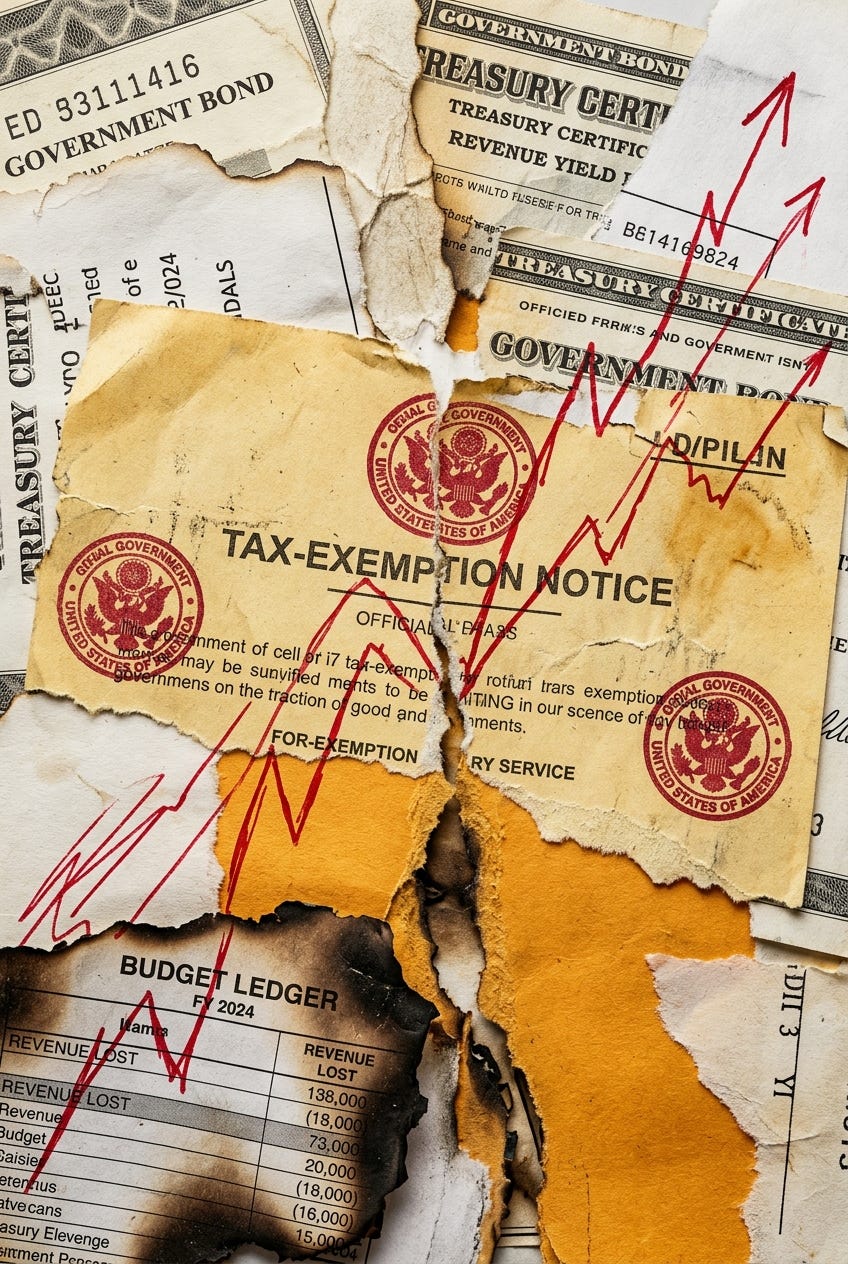
The second-level reading is that one of the central banks did not wait for its meeting, and the credit it governs is the one the consensus is least positioned for. The Reserve Bank of India held interest rates and, in the same decision, exempted foreign investors from tax on bonds, a move the FT described plainly as shoring up the rupee against foreign outflows and the war in Iran. This is not a technical liquidity adjustment. It is the action a central bank takes when portfolio capital is leaving and the currency is under defensive pressure, and it is the policy confirmation of a deterioration this desk has tracked across five consecutive dispatches since the April 26th Compound Ledger. Delhi forwent tax revenue to retain foreign bondholders. Jakarta, in the same week, arrested top officials overseeing a 15 billion dollar social spending scheme. The market priced the pause. Two governments acted inside it.
The Defense That Costs Revenue and the Audit That Costs Trust
The IMF's India Article IV of April 2025 modelled a current account deficit near 1.9% of GDP, a rupee anchored by stable portfolio inflows, and foreign portfolio investment as a structural feature of the external financing mix. The RBI's decision this week contradicts each of those assumptions through direct action rather than market signal. Holding rates while exempting foreign investors from bond tax is a two-part statement: the central bank judges that a rate hike would damage growth more than it would defend the rupee, so it has reached instead for a fiscal-cost lever, forgoing tax revenue to keep foreign capital in Indian government bonds. The plumbing consequence is a measurable revenue sacrifice incurred to defend the capital account, widening the fiscal gap relative to the Article IV projection at the precise moment the rupee remains under depreciation pressure that raises the local-currency energy import cost even with crude capped below 100 dollars. Indian equities losing out to Taiwan and South Korea in the AI allocation, as the FT reported, confirms the portfolio reallocation is structural. Import cover has not recovered across the six-dispatch tracking window.
Indonesia delivered a two-sided fiscal shock the IMF programme integrity assumptions did not contemplate: a revenue distortion and an expenditure governance failure in the same week. The six-year-low trade surplus with a sliding rupiah is the external account confirmation of the state enterprise export monopoly mechanism flagged at the May 24 Admission Cycle and confirmed institutionally at the May 31 Overdue Invoice, the monopoly capturing commodity export revenue below international market rates and compressing the FX inflows that sustain the currency. Layered on top, the FT reports the arrest of top officials overseeing a 15 billion dollar free school meals programme on corruption allegations. This is fiscally material: a flagship social spending line of that scale, subject to arrests at the top, signals either genuine budget leakage, meaning the expenditure data overstates value delivered per dollar, or political instability in budget execution. Either widens the variance band around the fiscal projections that anchor the spread. The revenue side is distorted by the monopoly; the expenditure side is now under a governance cloud. Both halves of the Indonesian ledger carry stress the Paris Club and DSA frameworks did not price.
The Three Frontier Corridors and the Tokyo Valve
For the bondholder in Mumbai or Jakarta, the week's significance is that the deterioration has moved from something the market could dismiss as sentiment to something governments have confirmed through action. India's RBI did not issue a statement of concern; it changed tax policy to defend the currency, which is the institutional equivalent of confirming the capital account is under strain. Indonesia's authorities did not deny budget pressure; they arrested the officials running the largest social spending scheme, which confirms the expenditure side is contested. Vietnam, the credit the consensus treated as the safe Asian frontier allocation on its AI supply chain surplus, printed inflation at a 2020 high with a trade deficit widening explicitly on fuel costs, the first material breach of its insulation thesis since the Iran war began. The Philippines held at 6.8% with the BSP signalling an imminent hike. Four Asian frontier and near-frontier credits, four distinct confirmations of the same structural drain, all in the same week, none repriced.
The Tokyo valve compounds every one of these corridors through the yen carry channel this desk has tracked across six consecutive dispatches from The Load-Bearing Defection through today. Governor Ueda's confirmation that the BOJ will discuss a rate hike at the June 16 meeting is the sixth consecutive Nikkei signal in six weeks and the clearest pre-meeting directional statement of the cycle. The carry trades funding Pakistan, Egypt, and Ethiopia sovereign duration were priced against a BOJ that had not formally committed to a hiking path; that assumption expires on a calendar date that is now nine days out. The one genuine mitigant is the FT's observation that falling Chinese oil imports near a decade low are holding crude below 100 dollars, which caps the energy import bill across the frontier. But that cap is a symptom of Chinese demand weakness, not energy market normalisation, and it does nothing to reverse the capital account defense in Delhi or the governance shock in Jakarta. The relief is on the income statement. The damage is on the balance sheet.
The Structural Repricing List
We are Cautious, Policy-Confirmed on India external duration and rupee-adjacent exposure. The RBI holding rates while exempting foreign investors from bond tax to defend the rupee against outflows is a capital-flight defense, not a technical measure, and it confirms through policy action what five prior dispatches documented as signal. The IMF April 2025 Article IV is now multiple phases behind: current account, portfolio inflows, and the fiscal cost of currency defense are all contradicted simultaneously. The equity reallocation to Taiwan and South Korea AI names confirms the move is structural.
We are Cautious, Compounding on Indonesia across the capital structure. The six-year-low trade surplus confirms the export monopoly revenue distortion; the 15 billion dollar school meals corruption arrests add an expenditure-side governance shock. Two independent fiscal stress points in one week, with no spread repricing through three weeks of escalation. Monitor the scope of the corruption probe and any IMF reference to budget execution integrity.
We are Cautious, Emerging on Vietnam near-frontier exposure. The 2020-high inflation with a fuel-cost trade deficit is the first material breach of the AI-insulation thesis that justified Vietnam's premium. Monitor whether the State Bank of Vietnam is forced to hike alongside the BSP, which would confirm a synchronised Southeast Asian tightening cycle rather than two idiosyncratic prints.
We are Cautious on Philippines sovereign duration, added to the watchlist this week. The BSP hiking into 6.8% inflation shifts the domestic yield curve upward, raising fiscal refinancing costs and compressing private credit at a pace the IMF baseline did not model. The Philippines now faces both domestic tightening and the regional carry repricing from the BOJ June 16 decision.
We are Cautious on yen carry-funded positions in Pakistan, Egypt, and Kenya sovereign duration. Ueda's pre-meeting confirmation is the sixth consecutive signal and the clearest of the cycle. Crude below 100 dollars, held there by weak Chinese demand, caps the energy import bill but does not address the funding-cost side, which reprices in nine days. The relief and the risk are on different statements of the same balance sheet.

What the Data Already Confirmed
The sovereign credit analyst who waits for the June 16 BOJ vote to read this week's story has mistaken the scheduled event for the decisive one. The decisive actions already happened. The Reserve Bank of India did not wait for a quarterly review to defend the rupee; it forwent tax revenue this week. Indonesia did not wait for an IMF mission to confront its budget integrity; it arrested the officials this week. Vietnam's inflation printed, the Philippines held at 6.8%, and Indian equity flows left for North Asia, all before a single central bank gavel fell. The market is excellent at pricing the calendar, the votes it can see coming, and far less reliable at pricing the balance sheet, the actions governments take when the pressure becomes undeniable. A central bank that gives up tax revenue to keep foreign bondholders is telling you something a 237 basis point spread is not yet repeating. The advantage is not in forecasting what Ueda will say in nine days. It is in believing what Delhi and Jakarta already did this week, before the market translates their actions into price.
Regards,
Sovereign Dispatcher