

KEY TAKEAWAYS
The Takaichi Reality: As predicted, Sanae Takaichi’s landslide victory in Japan is not just political theater; it is a mandate for fiscal expansion and a structurally weaker Yen, effectively subsidizing the carry trade for another quarter.
The Jakarta Flush: Moody’s decision to cut Indonesia’s outlook to negative is the first crack in the “Prabowo Premium.” The market has been ignoring the fiscal cost of his populist program, but the plumbing is finally starting to leak.
The Delhi Decoupling: The US-India interim trade deal confirms our long-held thesis: New Delhi is the primary beneficiary of global fragmentation, effectively monetizing its non-aligned status while others pay the tariff price.
The IMF Anchor: While the street chases the “Soft Landing,” the Fund’s latest data on Frontier debt service ratios suggests we are approaching a “Minsky Moment” for sovereigns with high external funding needs.

THE TAKAICHI MANDATE
The market spent the week celebrating the “certainty” of the Japanese election results, mistaking a political consolidation for an economic cure. The landslide victory for Sanae Takaichi and the LDP has been greeted with a relief rally in the Nikkei and a sharp sell-off in the Yen, as traders price in a continuation of Abenomics on steroids. The narrative is seductive: a strong leader with a mandate for growth will finally break the deflationary mindset. However, this “risk-on” reaction ignores the darker reality of why she won—a promise of massive fiscal spending that the JGB market may struggle to digest without explicit central bank repression. We are watching a market that is pricing in all the benefits of stimulus with none of the costs of the requisite debt monetization.
THE FISCAL CLIFF IN JAKARTA
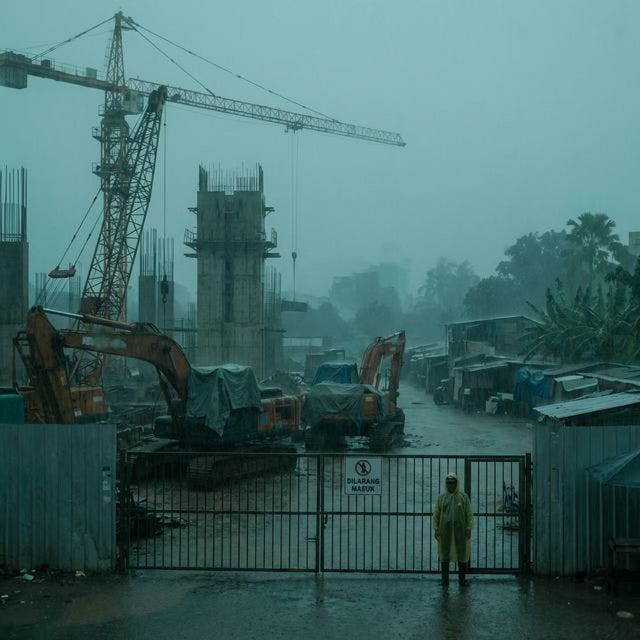
While Tokyo parties, the plumbing in Jakarta is beginning to scream. Moody’s decision to lower Indonesia’s outlook to “Negative” this week is arguably the most significant macro signal of the quarter, yet it was buried under election headlines. For months, the consensus has treated Prabowo’s incoming administration as a seamless continuation of the Jokowi era. The rating agency is effectively calling the market’s bluff, highlighting that the “Free Lunch” program and proposed sovereign wealth fund are unfunded liabilities that threaten to blow out the primary deficit well beyond the statutory 3% cap.
Crucially, this is not just about one credit rating; it is about the cost of capital. The IMF’s Article IV consultation for Indonesia has consistently warned that “contingent liabilities” from state-owned enterprises (SOEs) mask the true extent of public leverage. When you combine rising US treasury yields (the risk-free rate) with a widening risk premium for Indonesian sovereign bonds, the “breakeven” for foreign investors shifts dramatically. We are seeing early signs of foreign capital flight from Indo-GBs, not because the growth story is dead, but because the price of admission—the risk premium—was far too low for a regime that is prioritizing populist spending over fiscal discipline.

THE FRONTIER BIFURCATION
The global macro landscape is no longer a rising tide that lifts all boats; it is a sorting mechanism that punishes the fragile and rewards the strategic. The divergence this week between India and Indonesia is the perfect illustration of this new regime. India’s ability to secure an interim trade deal with the US—effectively exempting it from the worst of the protectionist wave—demonstrates the “Geopolitical Dividend” of being the West’s preferred counterweight to China. For the bondholder, this means Indian paper effectively carries a geopolitical guarantee that compresses spreads despite domestic valuation concerns.
Conversely, sovereigns that lack this strategic insulation are being left out in the cold. As capital creates a “safety corridor” from the US to India and Vietnam, it is bypassing markets like Indonesia and South Africa where the domestic reform momentum has stalled. The “Linkage” here is brutal: flows are not leaving Emerging Markets entirely, they are simply re-allocating to sovereigns that offer either a “Reform Story” (like Takaichi’s Japan) or a “Strategic Shield” (like Modi’s India). If you are holding an asset that offers neither—like Indonesian local currency bonds—you are essentially shorting the US Treasury volatility with no hedge.
THE WATCHLIST
We are Constructive on Indian Infrastructure Debt: The US trade deal serves as a green light for FDI; we prefer quasi-sovereign names linked to the logistics corridor.
We are Cautious on Indonesian Rupiah (IDR): The Moody’s warning is likely a precursor to further outflows; the currency has not yet priced in the full extent of the fiscal slippage.
We Prefer Long Japan Equities (Hedged): Takaichi’s win ensures the Yen remains the funding currency of choice; the “weak Yen, strong Nikkei” correlation will persist.
We are Underweight South African Sovereigns: Political uncertainty coupled with the global “flight to quality” leaves the Rand vulnerable to a sudden stop.
THE PRICE OF SILENCE
The most dangerous moments in markets occur when the price signal stops reflecting the fundamental reality. Right now, the spread between “Strategic Sovereigns” (India) and “Fiscal Slippers” (Indonesia) is structurally too tight. The market is effectively assuming that liquidity will paper over the cracks of bad policy indefinitely. But as the IMF reminds us, solvency is binary, while liquidity is a gradient. We are currently dancing near the exit, enjoying the liquidity party while Moody’s quietly locks the side doors. The smart money isn’t leaving the building yet, but it’s definitely checking where the fire escapes are.
Regards,
Sovereign Dispatcher