

KEY TAKEAWAYS
The Permanence Premium: The market continues to treat the Hormuz closure as a recoverable supply disruption. The IMF's Article IV baselines for energy-importing frontier sovereigns were built on an assumption of normalised shipping lanes. As we flagged last week, that baseline is now mathematically obsolete — and this week's wave of government-imposed energy rationing from Bangladesh to Zambia confirms the structural nature of the break.
The China Haven Paradox: Chinese government bond yields are down marginally since the conflict began — the first time in the post-GFC era that CGBs have functioned as a credible war haven asset. This re-rating of Chinese sovereign credit as a flight-to-safety instrument is the most structurally significant market development of the year, with profound implications for the dollar's reserve currency premium.
The Taiwan Strait Template: Taiwan's announcement of a $2bn coast guard reinforcement in direct response to Hormuz is not a defence story — it is a sovereign credit signal. The Hormuz playbook has been studied in Beijing. The probability of the Taiwan Strait becoming the next strategic chokepoint is being re-rated upward in real time, and this tail risk is completely absent from Asia sovereign credit pricing.
The Philippines Stagflation Confirmation: The BSP governor's explicit "rock and hard place" admission validates our cautious stance from recent weeks. The IMF Article IV for the Philippines modelled a clean easing cycle; the BSP is now publicly trapped between an inflation mandate and a growth mandate it cannot simultaneously honour. This is the definition of an IMF baseline that has expired in the field.

THE ILLUSION OF THE RECOVERY WINDOW
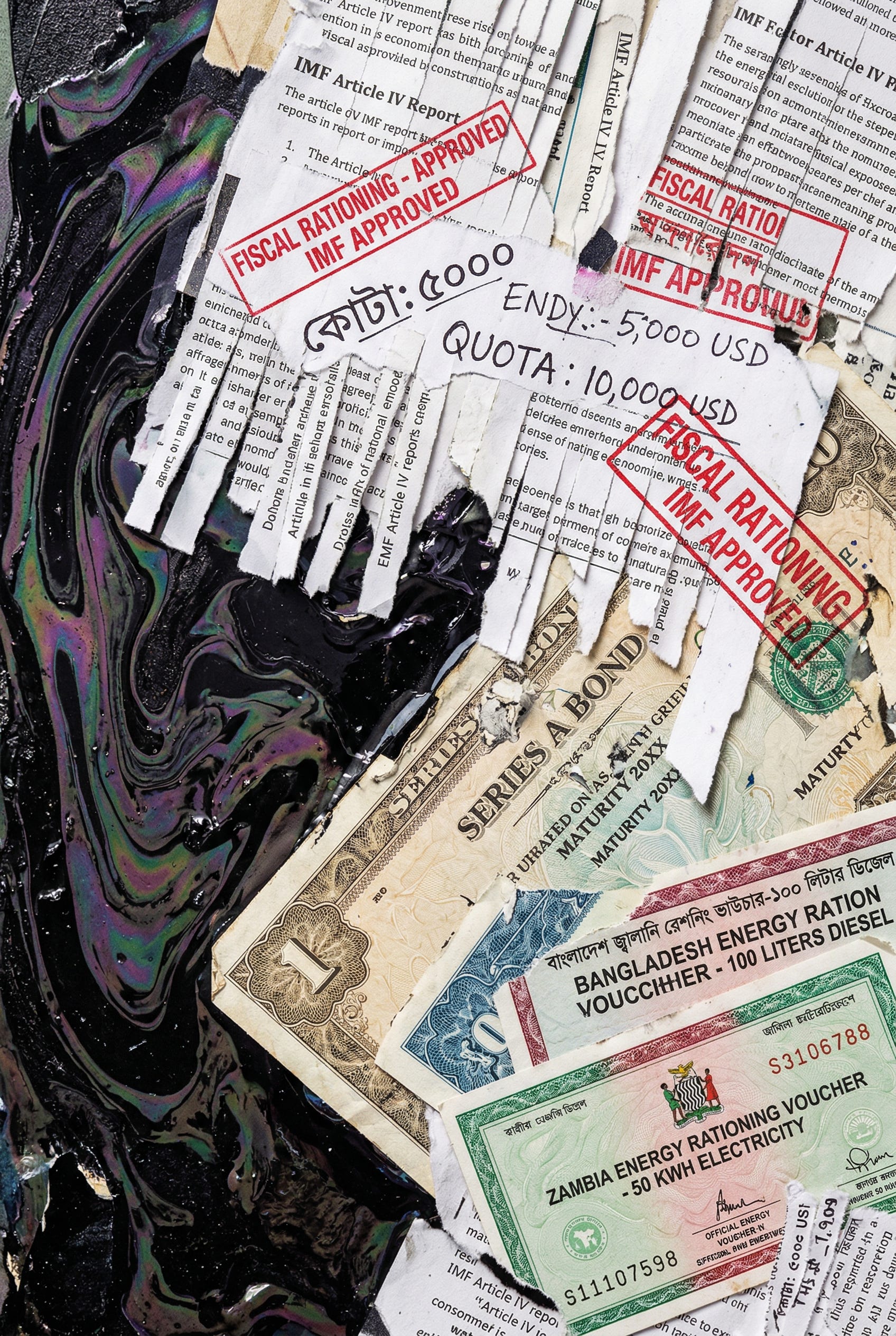
The market entered this week with a quietly persistent narrative: that the Hormuz closure, having held for several weeks, was moving toward resolution — a temporary disruption now entering its de-escalation phase. The price action in a handful of Asian and EM risk assets reflected this soothing interpretation — spreads not widening dramatically, currencies consolidating rather than collapsing, the sense that the energy shock had been "absorbed." But the week's most important signal was not in the asset prices; it was in the policy actions. Governments from Bangladesh to Zambia announced emergency fuel rationing regimes — not emergency subsidies, but rationing. A government that subsidises a shock is saying "we can afford to cushion the blow." A government that rations is saying "we cannot." The market is celebrating the absence of a sovereign credit event when it should be reading the rationing notices as the earliest administrative stage of precisely that outcome.
THE IMPORT LADDER AND THE RESERVE CLIFF
The structural reality facing energy-importing frontier sovereigns is best understood as an "Import Ladder" — where each rung represents a financing mechanism of declining sustainability, and the Hormuz shock has permanently accelerated the descent. The IMF's Article IVs for Philippines, Bangladesh and Pakistan were each constructed around a central assumption: that energy import costs would remain within a range allowing governments to sustain the existing combination of subsidies, reserve deployment and current account management without triggering a DSA breach. For the Philippines, the BSP governor's public admission of a "rock and hard place" between fighting inflation and supporting growth is a declaration that the IMF's baseline — which assumed a smooth normalisation of energy costs enabling a clean monetary easing cycle — has expired in the field. Import cover is not collapsing overnight; it is being slowly liquidated, one rationing decree at a time.
In Bangladesh, the energy rationing announcement carries a diagnostic weight that extends well beyond the immediate fuel supply problem. Bangladesh's current account had been stabilising under IMF program guidance, with garment export revenues providing the primary external buffer. But the garment sector is an energy-intensive manufacturing operation: if factories are rationing power, export output falls, and the very earnings stream that the IMF modelled as the stabilising anchor for the external accounts is now under direct physical constraint. The IMF's Bangladesh Article IV did not model a scenario where rationing-driven production shortfalls compress the current account buffer from both the export and import-cost sides simultaneously. This is not a tail scenario; it is the current operational reality, and the bond market has not yet found the correct clearing price.
FROM MANILA TO LUSAKA — THE GEOGRAPHY TAX
For the bondholder sitting with exposure to Asian and African frontier names, the defining insight of the past three weeks has been that the Hormuz shock is not a uniform external variable — it is a selective, geography-mediated tax, whose incidence falls with brutal precision on sovereigns that combine import dependency, thin reserve buffers and limited alternative supply channels. The Philippines sits squarely in this cross-hairs: a high-growth services and remittance economy that has historically managed its energy vulnerability through Gulf labour market participation — the same Gulf labour ecosystem now under significant stress as the war disrupts UAE hiring and Saudi project pipelines. As we have consistently highlighted in this space, the BSP's dilemma is real and the IMF's policy framework offers it no clean exit. What is new this week is the confirmation that the BSP governor himself has acknowledged the trap publicly — which in sovereign credit terms is the moment when idiosyncratic risk begins to be priced, and the window for positioning ahead of the repricing starts to close.
In Africa, the Zambia energy rationing story deserves more institutional attention than it is receiving. Zambia completed its IMF-backed debt restructuring, a landmark resolution for Sub-Saharan sovereign debt that was supposed to signal the beginning of a sustained fiscal recovery. The restructuring's DSA was calibrated around commodity export revenue assumptions and primary surplus targets that explicitly excluded the scenario of a major exogenous energy price shock. If the government is now rationing fuel — diverting scarce FX to maintain minimum energy supply rather than the reserve rebuilding envisioned in the program — the DSA's fiscal path is being violated in slow motion. This is the pattern the market missed with Senegal's derivatives disclosure last week: the official headline says "program on track" while the underlying plumbing quietly exhausts itself.
THE ASYMMETRY REGISTER
We are Cautious on Philippine duration and local currency bonds — the IMF's easing-cycle baseline has been publicly disowned by the central bank's own governor; the stagflation configuration creates duration risk that carry cannot compensate for. Prefer shorter-dated USD instruments over PHP exposure.
We are Constructive on Chinese Government Bonds (CGBs) as a war haven allocation — the emergence of CGBs as a flight-to-safety instrument is structurally significant and underpriced; China's domestically-anchored energy position (coal, renewables, Russian crude under sanctions waiver) insulates its fiscal framework in a way no other major EM sovereign can currently replicate.
We are Cautious on Bangladesh long-duration instruments — garment export revenue compression from energy rationing is a direct hit to the IMF program's external account assumptions; import cover deterioration is the leading indicator to monitor.
We Prefer shorter duration across Zambia's restructured debt profile — the DSA was not built for an energy shock of this magnitude; the rationing announcement is an early signal of primary balance slippage that will widen over coming quarters.
We Underweight Gulf-exposed remittance-dependent sovereigns (Philippines, Pakistan, Bangladesh) versus domestically self-sufficient peers — the Gulf labour market disruption is a second-order remittance shock that current account models have not yet absorbed.
We are Asymmetric on India hard currency — the RBI's NDF market intervention demonstrates institutional sophistication that differentiates India from the pack; managed depreciation is a positive delta versus the IMF baseline's passive exchange rate adjustment assumption.
THE WEIGHT OF STILL WATER
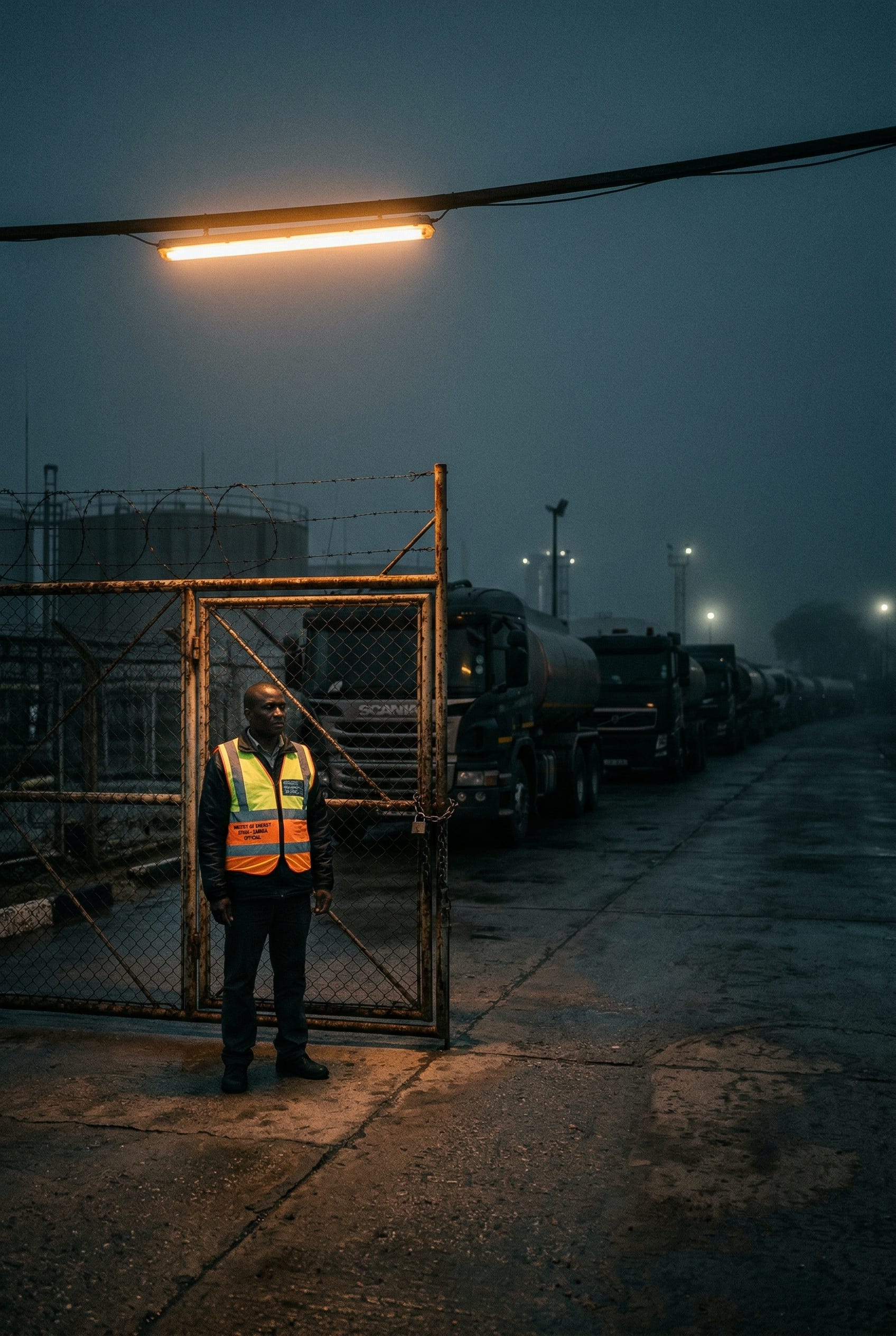
The most treacherous moments in sovereign credit history have not arrived with dramatic visible ruptures — they have arrived in the stillness, when governments began rationing quietly, when governors spoke in polite euphemism about impossible choices, when the market confused the absence of a default with the presence of stability. The Hormuz closure is three weeks old. The sovereign stress signals are not yet loud enough to force the consensus to reprice. But the rationing notices in Dhaka and Lusaka are not policy tools — they are confessions. They are governments announcing, in the language of administrative decree, that the financing mathematics of the IMF baseline have already been superseded by physical reality. The Taiwan coast guard announcement this week — $2 billion to reinforce against strait risk — adds a second dimension to this reckoning: the market has absorbed one strait closure as an event; it has not priced the possibility that strait closures are becoming a geopolitical instrument of choice. When geography becomes the trade, the sovereign that forgot it was priced by its map rather than its policy memoranda pays the heaviest premium. The stillness before a repricing is not a reason for complacency; it is the last affordable moment for preparation.
Regards,
Sovereign Dispatcher