


KEY TAKEAWAYS
More Chinese output is not proof of domestic repair. Production of some key chemical ingredients has almost doubled in five years, raising the stakes of access to foreign buyers.
South Africa can borrow while public cash sits idle. The IMF's February assessment put idle provincial and local balances at 2–2.5% of GDP, linking the mismatch to higher national borrowing.
Saudi recovery still needs a functioning passage. The Fund's July baseline projected 1.7% growth, conditional on shipping through Hormuz gradually normalising.
Kenya's ownership change needs a separate fiscal account. An October announcement described a 25% Kenya Pipeline stake transfer from public entities, rather than a quantified debt reduction.

The Output Before the Receipt
The attraction of a large number is that it can conceal the smaller mechanism that makes it useful. Reports indicate that production of some key Chinese chemical ingredients has almost doubled in five years, while South African municipalities struggle with water, electricity and roads and tanker attacks threaten Gulf shipping. These are different constraints on the route from economic activity to sovereign cash. A factory needs a buyer. An infrastructure allocation needs execution. An oil receipt needs a delivery. The Transfer Test in The Maturity Mismatch applies again: locate the benefit before assigning it to another balance sheet. This desk sees no common measured loss here. It sees three distinct conditions that a creditor must price before treating activity as financing capacity.

Capacity Has to Meet Demand
China's export strength can coexist with weak domestic demand. The February 2026 IMF Article IV, PDF page 75, estimated a 2025 current-account surplus of 3.3% of GDP alongside stagnant imports and weak domestic demand. That is a dated assessment, not an October balance. The October 29 account of transport infrastructure investment reaching its peak and the chemical-export expansion sharpen the allocation question. Slower infrastructure spending need not be a policy failure if consumption takes its place. It is more troubling if households remain weak and surplus capacity must rely on foreign markets facing new trade barriers. The Fund recommended shifting spending towards consumption and property support, away from inefficient investment. The evidence tests the composition of demand, not a new sovereign solvency event.
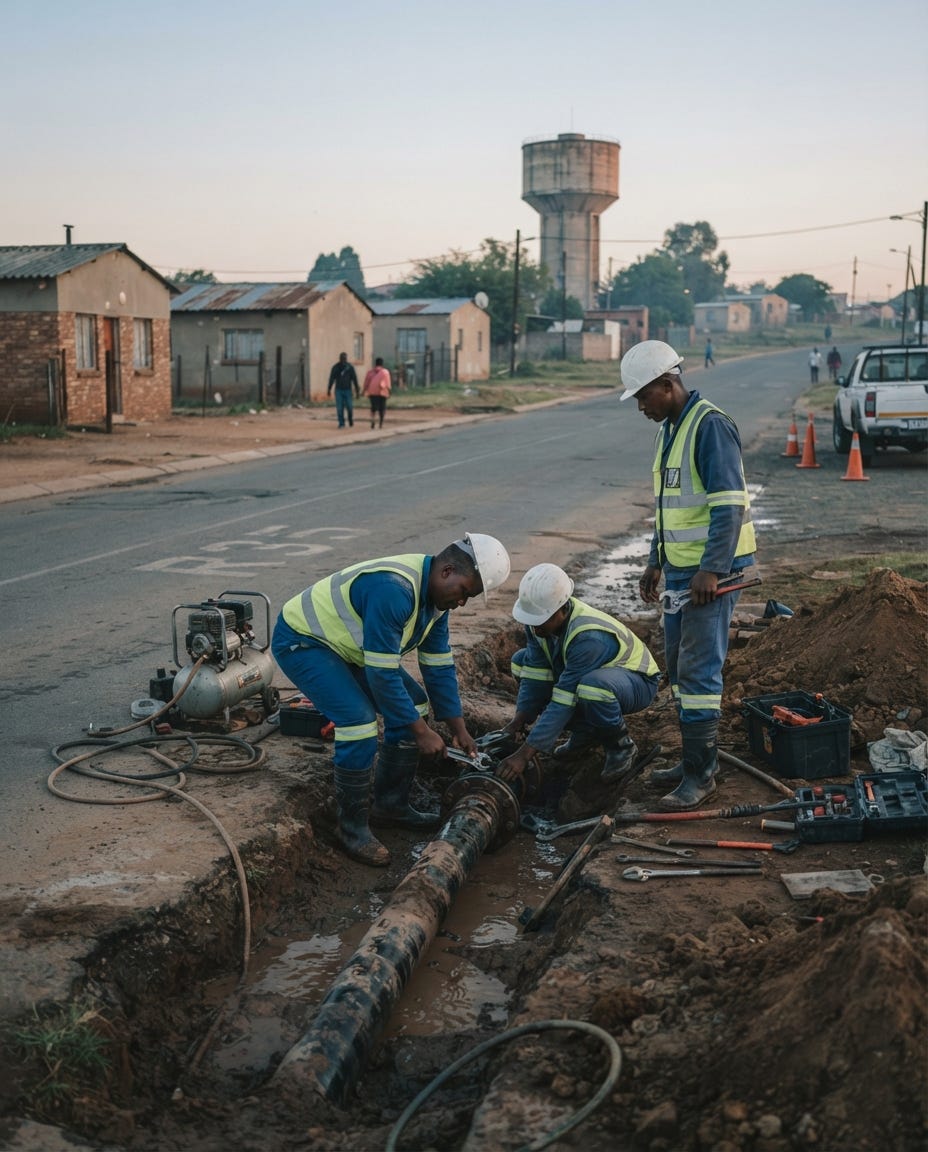
South Africa faces a different failure of conversion: money allocated nationally need not become services locally. The February 2026 IMF report's financial-management analysis, printed page 75, put idle provincial and local cash balances at 2–2.5% of GDP and linked them to higher national borrowing. That stock is neither a municipal-only figure nor an annual loss. It shows why a larger allocation can coexist with poor delivery and financing costs. The same report distinguished improved electricity generation from persistent distribution, transmission and water constraints. Relative to that baseline, the current service failures test implementation rather than reveal a newly discovered infrastructure shortage. The creditor's useful question is whether billing, procurement and spending capacity improve together, so that public money becomes a working asset instead of another claim on the budget.
The Barrel and the Import Bill
Saudi Arabia's logistical flexibility is a real advantage whose value still depends on the duration of disruption. The July 29 IMF assessment, PDF page 36, credited East-West pipeline rerouting with limiting delivery losses and said higher oil prices had more than offset lower volumes. Its 1.7% growth forecast nevertheless relied on shipping normalising. A reported agreement to store Saudi oil in Singapore caverns can improve availability at the destination; it does not itself establish a new passage through Hormuz or additional government cash. The October 29 account of Saudi efforts to secure de-escalation keeps the operating condition central. The Net Benefit framework from The Double Invoice therefore remains intact: assess delivered receipts alongside the resources needed to protect them.
Egypt shows why the same regional disruption can pressure an importer's external account through several routes. The August 2026 IMF programme review, PDF page 20, estimated that a $10-per-barrel oil-price increase would widen the current-account deficit by about 0.3% of GDP annually. That is a sensitivity, not an observed November loss. The report separately identified Suez receipts and Gulf-linked remittances as channels vulnerable to renewed tensions. The October 29 warning about tanker freight and naphtha-derived packaging costs illustrates why delivered costs matter beyond crude alone, without establishing an Egyptian inflation forecast. Saudi rerouting protects part of an export flow. Egypt must manage an import bill while protecting service and transfer receipts. Shared geography does not give the two sovereigns the same cash-flow exposure.
Nairobi's Quarter Share
Kenya's pipeline announcement is an ownership signal before it is a sovereign financing conclusion. Government reporting of the October 20 presidential address described private investors acquiring a 25% stake in Kenya Pipeline from public entities. Separately, the June 11 Treasury budget statement, printed page 67, identified KSh106.3bn from the March IPO as intended seed capital for the National Infrastructure Fund. Those are separate records, not amounts to add. The older November 2024 IMF programme review treated privatisation as a potential productivity channel. For today's creditor, ownership, settlement, use of proceeds and operating investment remain distinct tests. A share transfer alone neither builds another pipeline nor retires a sovereign maturity wall.
Follow the Constraint to the Issuer
The Standing Book's front-end preference was withdrawn in September and reinstated on October 4; October 29's review in The Maturity Mismatch retained it. This week's country evidence does not establish a fresh global term-premium verdict. China's fiscal-transmission caution remains open, while Saudi Asymmetry from 15 days ago still turns on operating disruption rather than a clean oil-price benefit.
We remain Cautious on China's fiscal-to-demand transmission for 3M. This extends The First Claim: larger export capacity does not resolve the domestic allocation test; stronger household demand alongside less inefficient off-budget investment and lower local-government financing stress would reverse it.
We are Cautious on South Africa's sovereign infrastructure execution for 3M. Local spending and service constraints can weaken the return on national funding; better municipal delivery and funded budget execution without fresh support that weakens consolidation would change the stance.
We retain Asymmetry in Saudi external sovereign credit for 3M. This rolls forward The Double Invoice: rerouting and buffers support resilience, while prolonged disruption threatens delivery and diversification; normal operations with intact fiscal and external buffers would close the concern.
What Reaches the Treasury
A balance sheet can own the right asset and still wait for the benefit to reach the place that owes the money. China's chemical plants, South Africa's public allocations and Saudi oil all enter the 2026 credit calculation through a different passage. Kenya adds the distinction between changing an owner and changing a sovereign's cash position. In The Conversion Gap, this desk is asking where the passage narrows and what would widen it. A headline can establish scale. It cannot settle that sequence. Follow the route. Check the recipient. Count the usable cash.
What Would Change Our Mind
Delivered costs fall. Sustained easing in shipping and refined-fuel costs alongside stable activity would weaken the common pressure on inflation and refinancing.
Execution produces fiscal room. Verified service improvements or a completed asset transaction whose proceeds reduce near-term public financing needs would show conversion beyond an announcement.
Chinese household demand strengthens. The next official year-on-year retail-sales release would challenge the demand constraint if it shows sustained acceleration, checked against consumer prices before treating nominal sales as stronger real demand.
Regards,
Sovereign Dispatcher