

KEY TAKEAWAYS
India is Running a Two-Variable Failure That the IMF Baseline Only Has Space for One. The Iran war's LPG supply destruction and the forecast weak monsoon are two independent shocks arriving simultaneously on the same credit. The IMF's India Article IV projected a current account deficit of approximately 1.9% of GDP and reserve accumulation at approximately $650bn, using an energy price path that has not materialised and a monsoon assumption that this week's forecasts have invalidated. Both variables are wrong. The spread has not moved.
Pakistan's Mediator Premium Is Real and Fiscally Irrelevant. As flagged in the April 12th and April 19th Dispatches, the bilateral creditor architecture underpinning the IMF Extended Fund Facility, specifically the UAE and Saudi deposit rollover mechanism, was structurally weakened before Asim Munir began facilitating in Islamabad. Diplomatic hosting activity generates geopolitical optionality, not balance-of-payments financing. The market is conflating the two.
Indonesia Has Now Accumulated Three Independent Governance Discounts. MSCI's delayed-but-live frontier downgrade review, the acid attack implicating the military under Prabowo, and the Taiwan Strait geopolitical re-rating via the Hormuz template are three separate signals pointing to the same conclusion: the governance and geopolitical risk premium in Indonesian sovereign credit is understated. Three data points make a thesis.
Kazakhstan's CPC Pipeline Suspension Is a Fiscal Story Wearing a European Energy Headline. Russia's restriction of Kazakh oil flows through the Caspian Pipeline Consortium is the week's most underpriced sovereign credit event. The IMF's Kazakhstan Article IV assumed stable pipeline throughput as the bedrock of the fiscal framework. That assumption has been explicitly violated by a sovereign counterparty with demonstrated willingness to use infrastructure access as leverage.

The Islamabad Premium and the Chennai Invoice
The market entered this week priced for a resolution story. Pakistan's General Asim Munir, the FT's "fatigue-wearing strongman," is now the architect of the most consequential diplomatic channel between Washington and Tehran, and risk assets have priced this role as a simple credit positive for Islamabad. The behavioral logic is familiar: a mediator earns a strategic premium, geopolitical relevance improves bilateral relationships, and improved bilateral relationships translate into more supportive creditor dynamics. The second-level question, the one that requires a read of the fiscal plumbing rather than the diplomatic calendar, is whether that mediation premium is being applied to a credit whose structural support architecture has already been compromised. As we analysed across the April 12th and April 19th Dispatches, the UAE's $3.5bn repayment request was not a bilateral anomaly. It was a signal that the financing relationships underpinning Pakistan's IMF Extended Fund Facility are under strain in a way that Islamabad's current geopolitical prominence does not reverse.
The more significant analytical development this week is not occurring in Pakistan. It is occurring approximately 1,800 kilometres to the east, in India, where two independent shocks have arrived simultaneously on a single credit that the consensus has treated as the region's structural anchor. The FT's reporting on India's LPG crisis and the accompanying weak monsoon forecast are not two separate human-interest pieces. They are two simultaneous violations of the IMF's India Article IV baseline. The Fund's November 2025 India Article IV recommended maintaining exchange rate flexibility to absorb external shocks and specifically flagged geopolitical tensions as a high-probability risk capable of triggering commodity price volatility and weighing on growth. The IMF was correct about the risk. It did not model the second shock arriving in the same quarter as the first. The market is watching Islamabad. The sovereign strategist is reading Chennai.

The Double Entry the Article IV Never Wrote
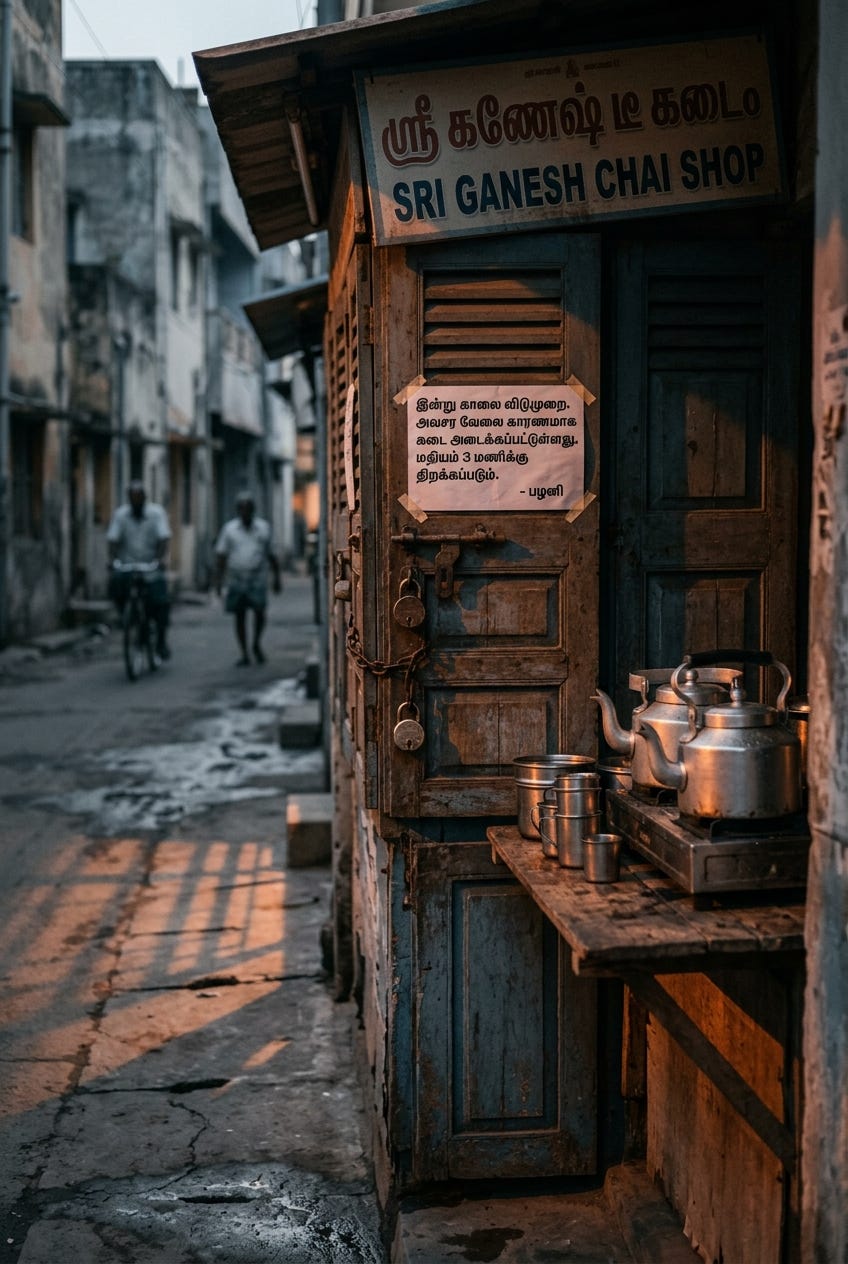
The IMF's India Article IV for November 2025 was calibrated to a world that this week is no longer recognisable. The Fund projected India's current account deficit at approximately 1.9% of GDP, predicated on energy import costs normalising from the pre-conflict baseline and reserve accumulation continuing toward a target of approximately $650bn. The Iran war's LPG supply disruption has invalidated the energy cost assumption in the most direct way possible: Indian households are purchasing induction cooking plates as substitutes, and chai vendors across South India are padlocking their stalls. This is not a market signal. It is a consumption-level rationing event that demonstrates the energy import cost deviation from the Fund's baseline is not marginal, it is structural. The RBI is now caught between defending the rupee through reserve sales, which compresses import cover below the comfortable threshold, or permitting currency weakness, which amplifies the very import-cost inflation it is attempting to control. The Fund's recommendation to use "available fiscal and monetary policy space" assumed there would be space available on both dimensions simultaneously.
The weak monsoon forecast compounds the existing LPG shock in a way the IMF's risk scenario framework did not model as a combined event. The Fund's standard risk matrix for India treated geopolitical tensions and commodity price volatility as independent downside scenarios with separate mitigation pathways: deploy fiscal space for the commodity shock, allow exchange rate adjustment for the external shock. A simultaneous monsoon failure plus energy cost shock creates a scenario where both transmission channels are degraded at once. A weak monsoon drives food CPI upward, eliminating the RBI's room to ease while channelling fiscal resources toward agricultural support rather than external buffer rebuilding. Import cover metrics, which were already compressing as the RBI defended the rupee through reserve sales during the Iran conflict, now face a dual squeeze from both the trade balance side and the capital account side. The first entry in the compound ledger is the energy bill. The second entry is the harvest forecast. The sum of the two is a primary deficit trajectory and a current account path that no sell-side India note published this month has repriced.
The CPC Corridor and the Wagner Perimeter
The Kazakhstan sovereign credit story this week is being processed as a European energy headline, and the bondholder will pay for that misclassification. Russia's suspension of Kazakh oil flows through the Caspian Pipeline Consortium, the infrastructure artery that channels the majority of Kazakhstan's hydrocarbon exports westward toward global markets, is a direct assault on the fiscal arithmetic the IMF's Kazakhstan Article IV was calibrated to defend. The Fund's January 2025 Kazakhstan Article IV explicitly recommended that Astana "diversify export routes" as a medium-term priority under the conflict disruption scenario, and flagged commodity price volatility as a high-probability risk requiring buffer accumulation. The CPC restriction does not merely reduce Kazakhstan's export revenue on a price basis. It tests whether the National Fund mechanism, the fiscal buffer designed to absorb commodity price volatility, was dimensioned to absorb a simultaneous volume restriction. The distinction matters for DSA trajectories: the National Fund's drawdown rules were calibrated to price risk, not pipeline access risk. The market reads this as a Berlin heating fuel problem. The Kazakhstan eurobond holder should read it as a revenue stream interruption with IMF programme implications.
The week's frontier canary is flying in the Sahel, and its relevance for the West African credit calendar is direct. Co-ordinated jihadist and secessionist attacks on Mali's Russian-backed military government are, on the surface, a regional security story. Read through the bondholder's lens, they are the earliest visible signal that the Wagner Group's security guarantee model in the Sahel is failing, with contagion implications for the WAEMU Eurobond cluster, including Ivory Coast, Senegal, and Benin, all of which hold live issuances with investor presentations built on regional stability assumptions. The IMF's Regional Economic Outlook for Sub-Saharan Africa, issued in October 2025, identified Sahel security deterioration as a material risk to the WAEMU zone's fiscal trajectory. The bond market has not repriced. Ivory Coast's Eurobond spread, as the de facto regional anchor credit, carries an implicit stability premium that the coordinated attacks on Bamako this week are actively discounting. Remittance flows from Malian diaspora communities to neighbouring credits represent a secondary transmission channel that is also now at risk.
The Asymmetry Ledger
We are Cautious on India sovereign duration. The compound shock from LPG supply destruction and the weak monsoon forecast represents a twin deviation from the IMF's Article IV baseline on the current account, the inflation path, and the reserve accumulation trajectory. The RBI is constrained on both the monetary and fiscal response vectors simultaneously. Import cover metrics through Q3 FY2026 are the key data series to watch.
We maintain our Cautious view on Pakistan sovereign credit, consistent with the April 12th and April 19th Dispatch positioning. The mediator premium from Islamabad's US-Iran facilitation role is real but does not offset the structural weakening of the bilateral deposit architecture. Geopolitical optionality and balance-of-payments financing are different instruments. The Programme's maturity wall and the bilateral creditor rollover schedule remain the binding constraints.
We are Asymmetric, negatively skewed on Indonesia. Three independent governance signals, the MSCI frontier review, Prabowo's military re-engagement through the acid attack incident, and the Taiwan Strait geopolitical re-rating via the Hormuz template, have accumulated into a coherent negative thesis. The IMF's investment-grade trajectory language for Indonesia was written before any of these three events. The current spread does not compensate for the combined downside scenario.
We Prefer to flag Kazakhstan sovereign credit as the week's most underpriced tail risk. The CPC pipeline suspension converts a commodity price risk, for which Kazakhstan's National Fund has buffer mechanisms, into a volume risk, for which the Fund framework was not designed. The distinction matters for DSA trajectories under the existing programme, and for the creditor relationship with Russia that underpins Kazakhstan's stability assumptions.
We are monitoring the WAEMU Eurobond complex with heightened alertness following the Mali security deterioration. Ivory Coast and Senegal carry an implicit regional stability premium in their spread pricing. That premium is being discounted in Bamako. The contagion pathway to spread widening in Abidjan and Dakar is not immediate, but it is now open in a way that was not visible three weeks ago.
The Second Entry
The IMF Article IV is not a prediction. It is a baseline calibrated to the distribution of historical outcomes, extended forward with assumptions that the conditions which produced past stability will persist into the future. The Fund's India team modelled geopolitical tensions as a downside risk with an assigned probability and a corresponding mitigation toolkit. What the model did not do, because no macroeconomic model is designed to do this, is allow for two independent tail risks arriving simultaneously in the same fiscal quarter. The monsoon was not in the LPG risk scenario. The LPG shock was not in the monsoon risk scenario. The Fund's recommended response to each was predicated on the other not happening at the same time. The sovereign strategist's job is not to be more accurate than the IMF's risk matrix. It is to recognise that the matrix was built for a world where shocks queue up, and to position accordingly when they do not. The compound ledger does not care which shock arrived first. It only cares about the sum. This week, India is discovering that sum in shuttered kitchens and empty gas cylinders, while the market watches a general in fatigues negotiate in a city 1,800 kilometres away. The second entry was always going to be written. The only question was whether it would arrive before or after the spread moved.
Regards,
Sovereign Dispatcher