

Key Takeaways:
The Energy Pivot: Russia’s oil gambit in Venezuela has collapsed, opening a massive arbitrage window for Indian refiners to capture discounted crude.
The Tech War Escalates: China’s “dual-use” export ban targeting Japan creates an immediate input shock for industrials that the macro data hasn’t caught yet.
The Sovereign AI Hedge: Korea is pivoting from hardware to infrastructure, monetizing “Data Sovereignty” for nations fearful of US/China surveillance.
The Positioning: We are Constructive on India (Energy) and Korea (AI Infrastructure), but Cautious on Japanese Industrials.

The Euphoria Trap
The market spent the week celebrating the “Soft Landing” narrative, actively suspending its disbelief regarding the geopolitical cracks widening beneath the surface. As noted in our 2026 Outlook, investors have embraced the “third stage” of a bull market, where optimism is the only baseline. However, applying a Howard Marks “Second-Level” lens, we see a dangerous disconnect: the consensus assumes that trade flows are governed by efficiency, while the news from Beijing and Caracas confirms they are now governed by power. The breakdown in Venezuela and the trade retaliation in North Asia are not cyclical blips; they are structural ruptures. The price of assets reflects a perfection that the “weather” of the last seven days simply does not support. We remain wary of the lack of skepticism currently priced into spreads.

The Death of Fungibility: The Bilateral Oil Trade
While we identified the “Supply-Side Hammer” of US intervention in Venezuela last week, the mechanism of the fallout has now clarified: this is an Indian arbitrage play. The headlines focus on the 20% collapse of the Bolivar on the black market, but the structural signal is the displacement of Russian influence by Indian corporate interests. With Russia’s “oil gambit” in tatters, Indian refiners (Reliance) are maneuvering to replace sanctioned Russian supply, effectively capturing a distressed asset base at a geopolitical discount. This aligns with the IMF’s India 2025 Article IV assessment, which highlights India’s resilience and ability to navigate external headwinds through strategic diversification.
This creates a distinct bifurcation in the energy complex. For the Nigerian sovereign, which we flagged as a “Trap” last week, this influx of reorganized Venezuelan supply remains a bearish headwind for their fiscal breakevens. However, for India, this improves the terms of trade by lowering the import bill for heavy crude. The “Plumbing” here isn’t just about more oil; it’s about who controls the flow. The market treats oil as fungible; we see it becoming increasingly bilateral and political.
Monetizing the Splinternet: "Sovereign Clouds" vs. Supply Bans
The trade war in Asia has moved from “De-risking” to active “Choking,” validating our thesis on the “Silicon Shield.” Last week, we highlighted Korea as a beneficiary of chip scarcity; this week, the thesis expands as Naver pitches “Sovereign AI” clouds to nations fearing US/China surveillance. This aligns with the IMF Korea 2024 Article IV, which identifies AI adoption as a critical offset to population aging and a driver of future productivity. Korea is monetizing neutrality, moving from a hardware supplier to a critical infrastructure partner for the non-aligned world (Saudi Arabia, ASEAN).
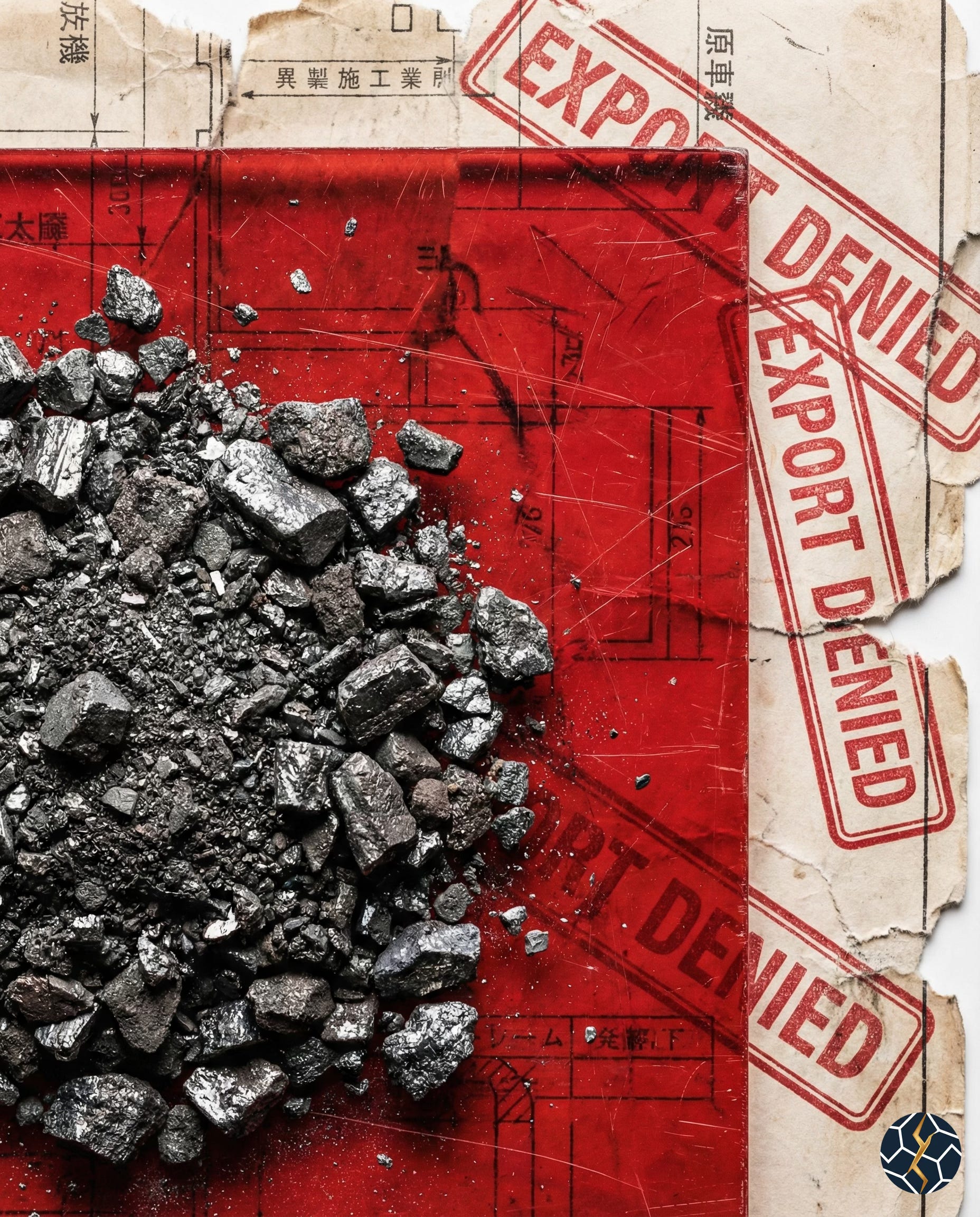
Contrast this resilience with the fragility emerging in Japan.China’s retaliation, an export ban on “dual-use” goods, is a direct attack on the input structure of Japanese industrials. While the IMF Regional Economic Outlookwarns of the costs of geoeconomic fragmentation, the market is currently ignoring the specific P&L damage this ban will inflict on Japanese manufacturers dependent on Chinese rare earths. We are seeing a “Splinternet” in real-time: Korea builds a lifeboat (Sovereign AI), while Japan hits a wall (Supply Ban).
The P&L Translation: Arbitrageurs and Infrastructure
Constructive on Indian Energy: The displacement of Russia in Venezuela provides a material input cost advantage for Indian refiners. This reinforces the IMF’s view of India’s robust external position.
Constructive on Korea (Sovereign AI): Beyond the memory chip cycle we noted last week, the move by Naverto export “Data Sovereignty” infrastructure opens a new, high-margin revenue stream that is uncorrelated with the commodity cycle.
Cautious on Japan Industrials: The Chinese export ban on dual-use goods invalidates the assumption of smooth supply chains. We expect margin compression that is not yet priced in.
Monitoring Cambodia/China Flows: The arrest and extradition of tycoon Chen Zhi signals Beijing is aggressively closing capital flight channels in the Mekong. This often precedes tighter domestic liquidity conditions in China.
The "Green Light" Fallacy
The worst loans are made at the best of times. As Howard Marksreminds us, “the riskiest thing in the world is the widespread belief that there is no risk”. The market sees the US soft landing as a green light to buy everything; we see the specific disintegration of trade norms in Asia and Latin America as a warning to be highly selective. Liquidity is returning to the Frontier, but so is structural volatility. We are participating where the “Plumbing” (Arbitrage/AI) supports the price, but we are fading the broad beta.
Regards,
Sovereign Dispatcher