

KEY TAKEAWAYS
The Bifurcation Trade: The dominant market dynamic has shifted from a uniform "energy shock" narrative to a deeply asymmetric bifurcation, strategic actors (China, Pakistan) are extracting geopolitical rent from the chaos while energy-importing sovereigns face compounding fiscal and external account damage that the IMF's pre-war baselines completely failed to model.
The Mediator's Paradox: Pakistan's role as the US-Iran intermediary creates a seductive short-term narrative premium, but the fundamental math of the IMF Stand-By Arrangement is deteriorating in real time, unbudgeted military costs, Afghan border expenditures, and the impossible arithmetic of serving two masters simultaneously.
The Concealed Ledger: Senegal's €650mn in undisclosed derivatives-based borrowing is not a footnote, it is a canary for how francophone African sovereigns are managing their fiscal gaps in the shadows of official IMF debt ceilings.
The BOJ Asymmetry: The Bank of Japan's decision to stand pat, with Governor Ueda explicitly warning that rising oil prices could drag on the economy rather than force hikes, represents the most important central bank signal of the week, it tells us the energy shock is now contractionary for importers, not just inflationary.

THE GEOPOLITICAL PREMIUM AND ITS HALF-LIFE
The market's fascination this week has been with the war's unexpected beneficiaries, those sovereigns clever enough, or lucky enough, to find themselves holding a card that the great powers desperately need. As we flagged in last week's note when analyzing the structural drain on Asian buffers, the Iran conflict has now progressed beyond its initial phase of raw energy shock into a more sophisticated second act: the reshuffling of regional leverage. Pakistan finds itself at the improbable intersection of Washington's desire for an off-ramp and Tehran's need for a trusted backchannel, a position that confers short-term diplomatic prestige but carries hidden fiscal costs that the consensus narrative is studiously ignoring. China, meanwhile, is hunting for strategic gains from what Beijing characterizes as a US quagmire, watching Washington's forces redeploy away from Asia and quietly recalibrating its Taiwan calculus. The price action in assets linked to these "arbitrage" narratives implies a belief that geopolitical positioning can substitute for fiscal discipline. It cannot. Geopolitical premium has a half-life measured in weeks; debt maturity walls do not move.

THE HIDDEN ARITHMETIC OF THE INTERMEDIARY
The fundamental error in the consensus Pakistan narrative is the conflation of diplomatic relevance with sovereign creditworthiness, two variables that operate on completely different timescales and rarely reinforce each other. The IMF's Stand-By Arrangement for Pakistan was engineered around a framework of fiscal austerity and external account stabilization that explicitly assumed no major unbudgeted expenditures. The deadly border clashes with Afghanistan have already introduced military costs that do not appear in the Fund's primary surplus projections. Now add the cost of active diplomatic infrastructure, the travel, the security, the tacit obligations, required to sustain Pakistan as a credible mediator between Washington and Tehran simultaneously. The IMF's Debt Sustainability Analysis assumed a government focused entirely on revenue mobilization and import compression; the Islamabad that is currently in the headlines is a government managing a multi-front strategic posture. These are not the same government, and the bond market has not updated accordingly.
The plumbing tells a starker story than the headlines. Net Foreign Asset positions at the State Bank of Pakistan remain fragile, with import cover hovering at a level that leaves the sovereign vulnerable to any sudden deterioration in current transfers or remittances. Pakistan's remittance base is heavily concentrated in Gulf labor markets, the same Gulf that is currently absorbing the spillover of the Iran war, with UAE pushing for international force deployment and Saudi Arabia quietly canceling Neom contracts as fiscal priorities shift. If Gulf labor markets contract as war-related uncertainty persists, Pakistan's remittance inflows, the single most important external buffer supporting the IMF program, could fall precisely when the government needs them most. This is not a tail risk; it is a structural feedback loop that the Fund's Article IV acknowledged as a vulnerability but modelled around rather than through.
THE CASUALTY LEDGER FROM CAIRO TO MANILA
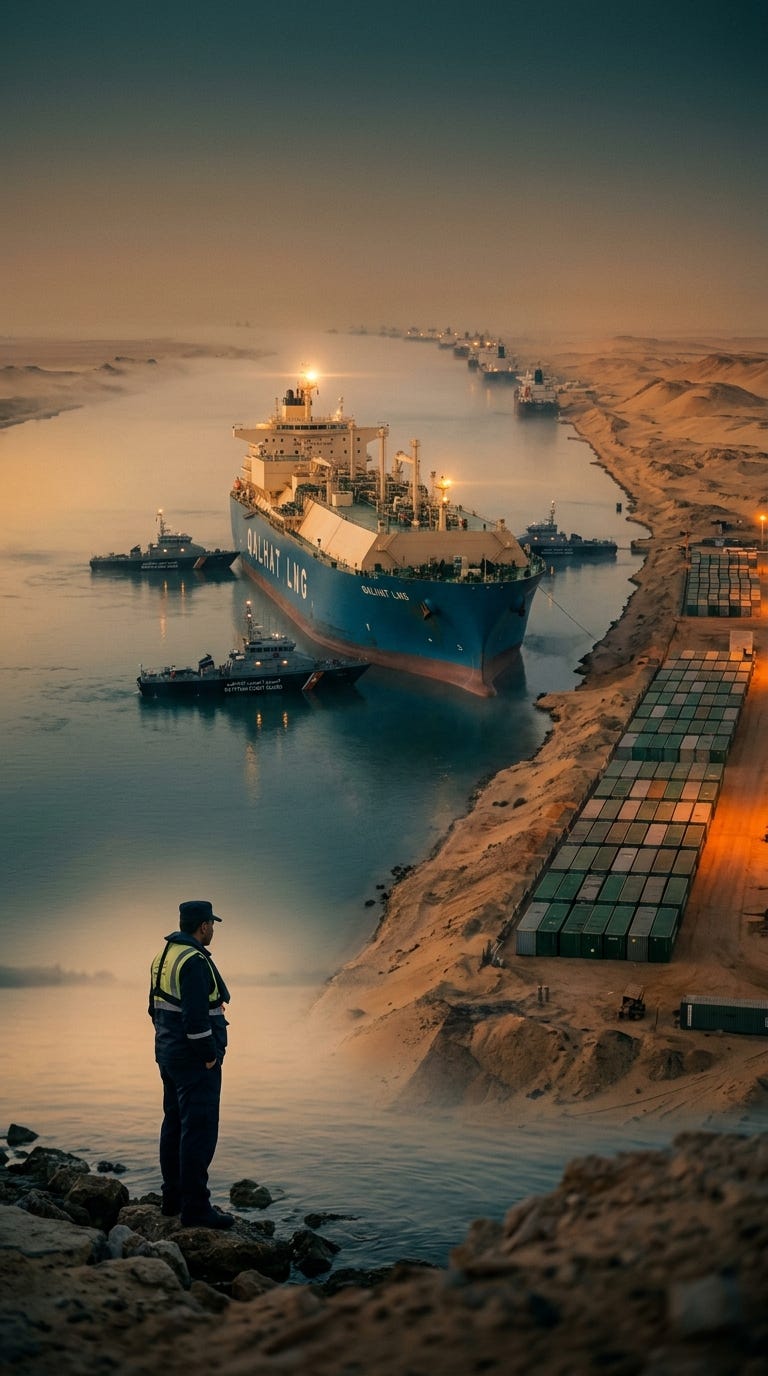
For the bondholder monitoring the FX intervention queues in Cairo or the rate committee minutes in Manila, this week delivered a clarifying message: the energy shock is no longer acute, it has become chronic, and the fiscal coping mechanisms are exhausting themselves. Egypt's announcement of emergency fuel conservation measures, after its natural gas import bill tripled since the outbreak of hostilities, is a textbook illustration of a sovereign that has moved from "managing" an external shock to "absorbing" it. The government cannot subsidize at the previous rate, cannot devalue without triggering a domestic cost-of-living crisis, and cannot cut essential imports without slowing the economy. This is the triangle of sovereign impossibility, and Egyptian policy-makers are visibly trapped inside it. The IMF's current account projections for Egypt did not assume a tripled gas import bill; every month this situation persists, the Fund's program assumptions diverge further from fiscal reality.
Across the water in the Philippines, the central bank governor articulated the regional dilemma with unusual candor, warning that raising rates to combat imported energy inflation could directly damage already fragile growth, a "rock and a hard place" formulation that is, in fact, the defining macro constraint for every energy-importing frontier sovereign in our coverage. The Asian Development Bank's emergency support package, announced this week to assist countries hit by the Iran war fallout, is not a solution, it is a multilateral acknowledgment that the shock has already exceeded the coping capacity of several member sovereigns. When the ADB activates crisis financing, it is signaling to the professional bondholder community that the afflicted nations have exhausted their first-line defenses. We are now in the territory of second-line support, and the question is how long that line holds.
THE DIVERGENCE REGISTER
We are Cautious on Pakistan local currency instruments and short-duration PKR bonds, the IMF program fiscal math is deteriorating due to unbudgeted military and diplomatic expenditures, and the mediation narrative creates a narrative premium that masks fundamental deterioration.
We are Cautious on Egyptian sovereign duration, the tripling of natural gas import costs relative to the IMF's Article IV baseline represents a material negative delta; import cover compression is accelerating, and the emergency conservation measures signal fiscal space exhaustion.
We are Constructive on Korea 2-year duration, South Korea's institutional quality and robust reserve position provide genuine insulation; the wartime budget introduces medium-term fiscal risk but the new BOK governor's technocratic credentials reduce policy error risk.
We Prefer Philippine short-dated USD instruments over local currency exposure , the BSP's acknowledged "rock and hard place" dilemma means rate policy will be reactive rather than pre-emptive, creating duration risk in the local curve.
We are Cautious on francophone Africa sovereign credit broadly following the Senegal derivatives disclosure, the €650mn undisclosed contingent liability raises the probability that IMF DSAs for the region are systematically understating actual debt burdens.
We Underweight long-duration exposure across energy-importing Asian and African sovereigns until the ADB's emergency financing signals are absorbed and the IMF's program re-calibrations are published.
THE COST OF THE BORROWED THRONE
History's most instructive lesson about intermediaries is not that they profit from their position, they often do, briefly, but that the throne borrowed from two opposing patrons requires constant re-collateralizing, and the collateral demanded is almost always fiscal sovereignty. The week's most misread story was not the headline about Pakistan's diplomatic virtuosity; it was the footnote about Senegal's €650mn in derivatives-based borrowing, disclosed only under pressure and defended as a mechanism for accessing "cheaper" financing. Both stories, separated by geography and surface narrative, share the same structural DNA: they are portraits of sovereigns managing the gap between what international frameworks permit and what domestic political economy requires, using instruments that obscure the underlying cost. The market prices the narrative; the IMF prices the math. When those two eventually reconcile, and they always do, at a clearing price set by the debt maturity wall rather than the diplomatic communiqué, the correction is rarely gentle. Position for the reconnection, not the fantasy.
Regards,
Sovereign Dispatcher